Treatment of restrictive cardiomyopathy in Germany
Innovations in the treatment of restrictive myocardial lesions: pharmacotherapy and heart transplantation

Restrictive cardiomyopathy (RCMP) is a rare but dangerous heart disease in which the myocardium loses its elasticity and cannot relax normally during diastole. This leads to severe heart failure, poor circulation and a high risk of complications.
RheinRegio Klinik Zentrum uses innovative methods for diagnosing and treating restrictive cardiomyopathy, including drug therapy and surgical interventions. Our world-class cardiologists and cardiac surgeons, modern equipment and individual approach allow us to achieve stabilization even in difficult cases.
Symptoms of restrictive cardiomyopathy
Signs of the disease develop gradually and may include:
- Shortness of breath (first with exertion, then at rest)
- Severe fatigue and weakness
- Swelling of the legs and abdomen (due to blood stagnation)
- Swelling of the neck veins
- Heart rhythm disturbances (arrhythmias, atrial fibrillation)
- Chest pain (rarely, with concomitant ischemia)
- Liver enlargement and ascites
Symptoms are similar to other forms of heart failure, so accurate diagnosis is essential.
Find out the cost of treatment
To find out the approximate cost of treatment, answer a few questions and we will contact you!
Diagnostics restrictive cardiomyopathy
The RheinRegio Klinik Zentrum carries out a comprehensive examination, including:
- Echocardiography (ultrasound of the heart) – assessment of diastolic function, wall thickness, pressure in the chambers
- MRI of the heart with contrast – detection of fibrosis and myocardial infiltration
- Cardiac catheterization – measuring pressure in the ventricles and atria
- Endomyocardial biopsy (if amyloidosis, hemochromatosis is suspected)
- Laboratory tests – exclusion of secondary causes (amyloidosis, sarcoidosis)
Thanks to high-precision equipment and the experience of specialists, we establish an accurate diagnosis and determine the optimal treatment tactics.
Treatment methods restrictive cardiomyopathy
Therapy is aimed at eliminating the cause (if possible) and relieving symptoms of heart failure:
Drug treatment:
- Diuretics – reducing fluid retention
- Beta blockers and CCBs – control of rhythm and diastolic function
- Anticoagulants – prevention of thrombosis in atrial fibrillation
- Specific therapy (for amyloidosis, hemochromatosis)
Surgical methods:
- Implantation of a pacemaker/defibrillator – for severe arrhythmias
- Heart transplantation is the only radical method for primary RCMP
- Removal of thickened endocardium (in rare cases)
Why choose RheinRegio Klinik Zentrum?
- World-renowned cardiologists – specialists in rare cardiomyopathies
- The most accurate diagnostics – MRI, genetic tests, biopsy
- Access to the latest drugs – treatment of amyloidosis, hemochromatosis
- Surgical treatment – cooperation with leading transplantologists in Europe
- 24/7 support – from the first consultation to rehabilitation
Survival prognosis
5-year survival rate:
- Primary forms (idiopathic): 30–50%
- Secondary forms (amyloidosis, hemochromatosis): depends on the underlying disease
- Cardiac amyloidosis: 6–24 months without treatment
- Hemochromatosis: better prognosis with timely therapy
Key factors:
- Early diagnosis (before the development of severe diastolic dysfunction)
- Possibility of treating the cause (eg, Desferal for hemochromatosis)
- No pulmonary hypertension
Unfavorable signs:
- Severe heart failure (FC III–IV)
- NT-proBNP level >3000 pg/ml
- Low systolic pressure (<90 mmHg)
Note: Heart transplantation is the only radical method for progression.
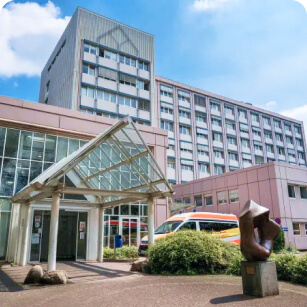
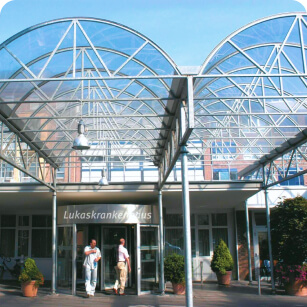
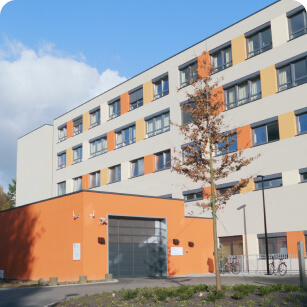
Our clinics
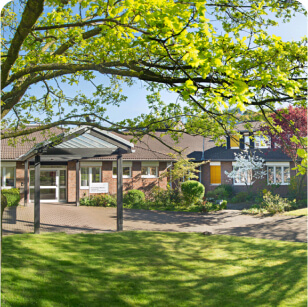
Our clinics in Germany provide treatment restrictive cardiomyopathy at the highest level, with the most modern equipment. In addition, the RheinRegio Klinik Zentrum clinics offer comfortable living conditions, as well as friendly and responsive medical staff.
Why RheinRegio Klinik Zentrum?

- Expert level – doctors with international experience
- Modern equipment — accurate diagnosis and treatment
- Personalized approach — individual treatment regimens
- Fast deadlines – minimum wait for examinations
- Comfortable conditions – care for every patient