
Treatment of breast cancer in Germany
Modern methods of treating breast cancer: from early diagnosis to personalized therapy

Breast cancer (BC) is the most common cancer pathology in women, diagnosed annually in 2.3 million patients worldwide. RheinRegio Klinik Zentrum uses genomic technologies to select therapy based on the molecular profile of the tumor, achieving a 5-year survival rate of up to 99% in early stages.
Symptoms of breast cancer
Changes in the chest:
- Seal or a lump in the breast (often painless).
- Changing shape or size one breast.
- Nipple retraction or skin (“lemon peel”).
Skin manifestations:
- Redness, peeling, or sores on the skin of the breast.
- Swelling, a feeling of “warmth” in the area of the tumor.
Nipple discharge:
- Bloody, clear or yellowish (not associated with lactation).
Enlarged lymph nodes:
- Axillary, supraclavicular – dense, painless.
Late symptoms (with metastases):
- Pain in bones, liver, shortness of breath (with lung damage).
Diagnosis of breast cancer at the RheinRegio Klinik Zentrum
- Mammography with AI analysis (accuracy 98%)
- MRI with contrast (detection of microcalcifications 0.5 mm)
- Liquid biopsy Guardant360 (77 genes)
- Oncotests:
- Oncotype DX (21 genes)
- MammaPrint (70 genes)
- PET-MRI with PSMA for metastases
Each direction is supervised by advanced oncologists.
Find out the cost of treatment
To find out the approximate cost of treatment, answer a few questions and we will contact you!
Classification and stages of breast cancer
Classification by molecular subtypes (based on IHC analysis):
- Luminal A (ER+/PR+, HER2-, low Ki-67) – the best prognosis.
- Luminal B (ER+/PR+, HER2±, high Ki-67) – more aggressive.
- HER2 positive (HER2+) – requires targeted therapy (trastuzumab).
- Triple negative (ER-/PR-/HER2-) – aggressive, more often in young women.
Stages according to the TNM system (8th edition, 2017):
- Stage 0 (in situ): Non-invasive cancer (ductal or lobular).
- Stage I: Tumor ≤2 cm, no lymph node involvement (N0).
- Stage II:
-
- IIA: Tumor 2–5 cm without lymph node involvement (N0) OR ≤2 cm with 1–3 axillary lymph nodes.
- IIB: Tumor 2–5 cm with 1–3 lymph nodes OR >5 cm without lymph node involvement.
- Stage III (locally distributed):
- Tumor of any size + 4–9 axillary lymph nodes OR involvement of internal mammary lymph nodes.
- IV stage (metastatic): Metastases to distant organs (bones, liver, lungs, brain).
Histological classification:
- Ductal carcinoma (80% of cases).
- Lobular carcinoma (10–15%).
- Rare forms: Medullary, mucinous, tubular cancer.
Grading:
- G1 (low): Slow growth, good prognosis.
- G2 (moderate).
- G3 (high): Rapid progression.
Important:
- The stage determines the treatment tactics (surgery, chemotherapy, radiation therapy).
- Molecular subtype influences the choice of targeted drugs.
Breast cancer treatment methods
Surgical technologies
- Radial resection with intraoperative radiotherapy (TARGIT)
- Robot-assisted mastectomy (Da Vinci)
- Direct reconstruction with DIEP flap
Systemic therapy
▸ Neoadjuvant chemotherapy (pathological complete response in 60% of TNBC)
▸ Targeted drugs:
- Abemaciclib (3rd generation CDK4/6 inhibitor)
- Trastuzumub-deruxtecan (ADC drug)
Radiation techniques
- Proton therapy for left-sided tumors
- APBI (accelerated partial irradiation in 1 week)
Survival prognosis
Luminal A (ER+/PR+/HER2-):
- The best forecast is 95% 5-year survival rate at stages I–II.
- Risk of relapse after 10+ years (requires long-term hormone therapy).
- HER2+ (with targeted therapy):
-
- 85–90% in the early stages (regimens: trastuzumab + chemotherapy).
- For metastases – median survival 4–5 years (new drugs: TDXd).
- Triple negative (ER-/PR-/HER2-):
- Aggressive – 70–75% at stages I–II, but a high risk of early relapses.
- For metastases – median 12–18 months (immunotherapy improves prognosis).
Key factors that worsen the prognosis:
- Tumor size >5 cm.
- Defeat ≥4 lymph nodes.
- Skin/chest wall invasion.
- Low differentiation (G3).
- Lack of receptor expression (ER-/PR-).
- Metastases to the liver/brain.
How to improve the forecast?
- Early diagnosis:
- Mammography from 40 years of age (earlier if there are risks).
- MRI for dense breast tissue.
- Modern treatment:
- Surgery (organ-conserving or mastectomy).
- Radiation therapy (reduces relapses by 50%).
- Targeted therapy (eg, olaparib for BRCA mutations).
- Regular monitoring:
- Monitoring MRI/PET at high risk.
Our clinics
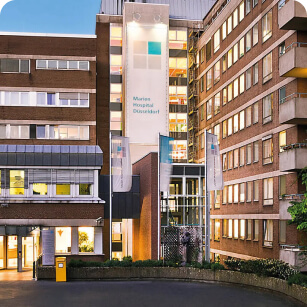
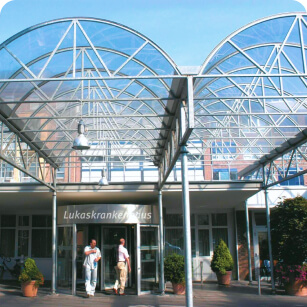
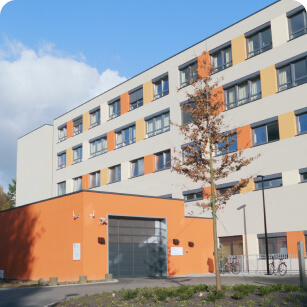
The association of clinics RheinRegio Klinik Zentrum offers the organization of lymphoma treatment in Germany without intermediaries, providing access to the country’s leading oncology clinics. We combine advanced techniques, an individual approach and the highest level of medical care, giving hope even in difficult cases.








Why RheinRegio Klinik Zentrum?

- Multidisciplinary consultation (surgeon+oncologist+radiologist+geneticist)
- Cryopreservation of eggs before chemotherapy
- Phase I-III clinical trials (20+ protocols available)
- Psychosocial support (“Return to Life” program)