
Treatment of mammary carcinoma in Germany
Innovations in the treatment of mammary carcinoma: from molecular profiling to personalized treatment

Mammary carcinoma (breast cancer) is the most common cancer pathology in women, accounting for 25% of all malignant diseases. RheinRegio Klinik Zentrum uses a personalized approach using genomic tumor profiling and organ-preserving technologies.
Symptoms of mammary carcinoma
Main features:
- Seal in the chest (usually painless)
- Changing shape/size mammary gland
- Nipple retraction or skin (“lemon peel”)
- Discharge from the nipple (bloody, transparent)
- Redness/flaking breast skin
Less common:
- Enlarged axillary lymph nodes
- Chest pain (in later stages)
Important: Before 15% of cases are asymptomatic – regular mammography is required.
Diagnosis of mammary carcinoma at RheinRegio Klinik Zentrum
- Mammography with tomosynthesis (3D image)
- MRI with contrast (accuracy 95%)
- Liquid biopsy (detection of circulating DNA)
- Genomic testing (Oncotype DX, MammaPrint)
- PET-CT with PSMA (for HER2 tumors)
Each direction is supervised by advanced oncologists.
Find out the cost of treatment
To find out the approximate cost of treatment, answer a few questions and we will contact you!
Classification and stages of mammary carcinoma
Molecular subtypes (by IHC):
- Luminal A (ER+/PR+/HER2-, low Ki-67)
- Luminal B (ER+/PR+/HER2±, high Ki-67)
- HER2 positive (HER2+)
- Triple negative (ER-/PR-/HER2-)
Stages (TNM, 8th ed.):
- 0 (in situ): Non-invasive (DCIS, LCIS)
- I: Tumor ≤2 cm, N0
- IIA: 2–5 cm (N0) or ≤2 cm + 1–3 lymph nodes
- IIB: 2–5 cm + 1–3 lymph nodes
- III: Tumor >5 cm or involvement of ≥4 lymph nodes
- IV: Metastases (bones, liver, lungs)
Histological types:
- Ductal (80%)
- Lobular (10%)
- Rare (medullary, mucinous)
Malignancy grade (G):
- G1 (low)
- G2 (moderate)
- G3 (high)
Note: The stage determines the treatment tactics, the subtype determines the choice of therapy.
Treatment methods for mammary carcinoma
Surgical methods
- Radial resection with intraoperative radiation therapy
- Reconstruction with DIEP flap after mastectomy
- Sentinel biopsy instead of lymph node dissection
Systemic therapy
- Neoadjuvant chemotherapy (to shrink the tumor)
- Targeted drugs (CDK4/6 inhibitors)
- Immunotherapy (Pembrolizumab for PD-L1+)
Radiation treatment
- APBI (accelerated partial irradiation)
- Proton therapy for left-sided tumors
Survival prognosis
5-year survival rate by stage:
- 0 (in situ): ~100%
- I: 95-100%
- IIA: 90-93% | IIB: 80-85%
- III: 70-75% (IIIA), 50-60% (IIIB/C)
- IV (metastatic): ~30%
By subtype:
- Luminal A: Best prognosis (95% at stages I-II)
- HER2+: 85-90% (with targeted therapy)
- Triple negative: 70-75% (high risk of relapse)
Key factors:
- Tumor size (<2 cm)
- No lymph node involvement
- Low Ki-67 (<15%)
- Response to hormone/immunotherapy
Note: Modern methods (CDK4/6 inhibitors, immunotherapy) improve the prognosis even at stage IV.
Our clinics
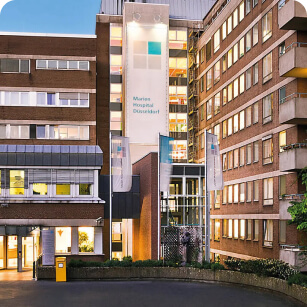
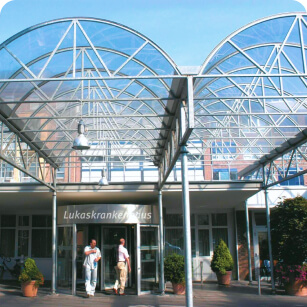
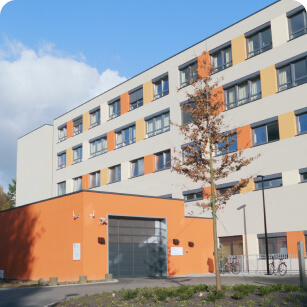
The association of clinics RheinRegio Klinik Zentrum offers the organization of treatment for mammary carcinoma in Germany without intermediaries, providing access to the country’s leading oncology clinics. We combine advanced techniques, an individual approach and the highest level of medical care, giving hope even in difficult cases.








Why RheinRegio Klinik Zentrum?

- Multidisciplinary consultations with the participation of oncologists, geneticists and plastic surgeons
- Access to clinical trials of new drugs
- Fertility Preservation Programs
- Da Vinci robotic systems for precision operations