
Treatment of gastric carcinoma in Germany
Modern methods of treating gastric carcinoma: from early endoscopic diagnosis to personalized therapy

Gastric carcinoma (stomach cancer) is an aggressive malignant tumor, occupying 5th place in the structure of cancer diseases. RheinRegio Klinik Zentrum uses innovative protocols, including robotic surgery, HIPEC therapy and immuno-oncology, which increases the 5-year survival rate to 70% in early stages.
Symptoms of gastric carcinoma
Early signs (often absent):
- Heaviness after eating
- Aversion to meat
- Decreased appetite
Late symptoms:
- Epigastric pain
- Vomiting blood (coffee grounds-colored)
- Melena (black tarry stools)
- Dramatic weight loss (>10% in 3 months)
- Anemia (pallor, weakness)
Alarm signals:
- Dysphagia (with cardiac cancer)
- Rapid saturation (with outlet stenosis)
Diagnosis of gastric carcinoma at RheinRegio Klinik Zentrum
- Gastroscopy with NBI endoscopy and biopsy (accuracy >95%)
- Endo-ultrasound – assessment of the depth of invasion
- Abdominal CT with contrast + PET-CT
- Germ testing (CDH1, TP53)
- Liquid biopsy (detection of circulating DNA)
Each direction is supervised by advanced oncologists.
Find out the cost of treatment
To find out the approximate cost of treatment, answer a few questions and we will contact you!
Classification and stages of gastric carcinoma
Histological types (according to Lauren):
- Intestinal (glandular structures, best prognosis)
- Diffuse (isolated cells, aggressive)
- Mixed
Stages (TNM, 8th ed.):
- 0 (Tis): Cancer in situ
- I: Tumor in the mucosa/submucosa (IA) or muscle layer (IB)
- II: Germination into serosa ± 1-6 lymph nodes
- III: Invasion of adjacent organs or ≥7 lymph nodes
- IV: Metastases (liver, peritoneum, distant lymph nodes)
Molecular subtypes:
- HER2+ (10-20%)
- MSI-H (microsatellite instability)
- EBV-associated
Degree of differentiation:
- G1 (highly diff.) → G3 (low diff.)
Note: The intestinal type is more often associated with H. pylori, the diffuse type is more often associated with the CDH1 mutation.
Treatment methods for gastric carcinoma
Surgery
- Robot-assisted gastrectomy Da Vinci
- Functionally sparing resections (for early cancer)
- HIPEC therapy (intraoperative hyperthermic chemotherapy)
Targeted therapy
- Trastuzumab (HER2+ tumors)
- Ramucirumab (anti-VEGFR2)
Immunotherapy
- Pembrolizumab (for MSI-H/dMMR status)
- Nivolumab in combinations
Radiation therapy
- IMRT with respiratory gating
- Intraoperative radiation therapy (IOERT)
Survival prognosis
5-year survival rate:
- Early stages (I): 60-80%
- Stage II: 35-50%
- Stage III: 15-30%
- Stage IV: <5%
Key prognosis factors:
- Early diagnosis (tumor limited to mucosa)
- Intestinal type (better than diffuse)
- HER2+ or MSI-H status (response to targeted/immunotherapy)
- Possibility of radical surgery
- Absence of peritoneal metastases
Unfavorable factors:
- Diffuse type (signet ring cell)
- Involvement of ≥7 lymph nodes
- Invasion into the serosa
Note: Modern regimens (FLOT chemotherapy, immunotherapy) improve the prognosis in later stages.
Do you want to receive a treatment protocol in Germany?
Send histological slides for a second opinion to a professor of gastroenterology oncology.
Our clinics
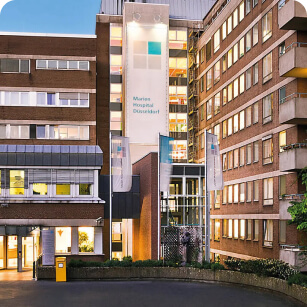
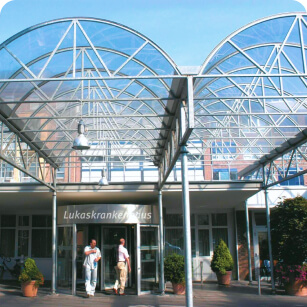
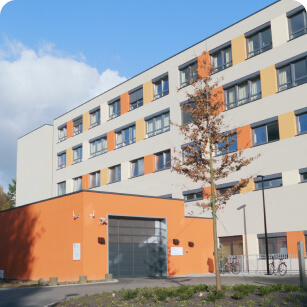
The association of clinics RheinRegio Klinik Zentrum offers the organization of treatment of gastric carcinoma in Germany without intermediaries, providing access to the country’s leading oncology clinics. We combine advanced techniques, an individual approach and the highest level of medical care, giving hope even in difficult cases.








Why RheinRegio Klinik Zentrum?

- Specialized Center for Gastrointestinal Tumors
- Multidisciplinary consultation for each case
- Cryopreservation of ovarian tissue before chemotherapy
- Reconstruction of the esophagus after total resections
- Phase I-II clinical trials