
Treatment of laryngeal carcinoma in Germany
Modern methods of treatment of laryngeal carcinoma: from early diagnosis to organ-sparing therapy

Laryngeal carcinoma (cancer of the larynx) accounts for 3% of all cancers, with a predominance in men 50-70 years old. At RheinRegio Klinik Zentrum, they use functional-preserving techniques that allow total laryngectomy to be avoided in 80% of cases.
Symptoms of laryngeal carcinoma
Early signs:
- Hoarseness (lasts >2–3 weeks without improvement)
- Discomfort/pain in the throat when swallowing
- Foreign body sensation in the throat
Late symptoms:
- Difficulty breathing (stridor)
- Blood in saliva or sputum
- Enlarged lymph nodes on the neck
- Unpleasant smell from the mouth
- Weight loss for no reason
Rarely:
- Ear pain (referred)
- Voice change (aphonia)
Important: Hoarseness – key early symptom. If it persists for longer than 3 weeks, go to an ENT specialist immediately!
Diagnosis of laryngeal carcinoma at the RheinRegio Klinik Zentrum
Primary examination:
- Videolaryngoscopy (enlarged tumor visualization)
- Endoscopic biopsy with histological analysis
Visualization:
- CT scan of the neck and chest (estimate of size and prevalence)
- Soft tissue MRI (to determine cartilage/vascular invasion)
- PET-CT (detection of metastases)
Additional research:
- HPV testing (prognostic factor)
- Immunohistochemistry (PD-L1 status for immunotherapy)
Advantages of the clinic:
- Expert pathological analysis
- Fast deadlines receiving results (2-3 days)
- Individual plan treatment at the consultation
Each direction is supervised by advanced oncologists.
Find out the cost of treatment
To find out the approximate cost of treatment, answer a few questions and we will contact you!
Classification and stages of laryngeal carcinoma
By localization:
- Vocal cords (best prognosis)
- Epiglottis
- Subpharyngeal space (aggressive course)
- Vestibular department
Histological types:
- Squamous cell carcinoma (90% of cases)
- Less often: adenocarcinoma, sarcoma
Stages (TNM, 8th ed.):
- 0: carcinoma in situ
- I: Tumor ≤1 cm in one anatomical site
- II: Tumor >1 cm or spread to adjacent structures without fixation
- III: Vocal cord fixation or 1 affected lymph node ≤3 cm
- IV:
-
- IVA: Cartilage/soft tissue invasion of the neck
- IVB: Spinal/great vessel involvement
- IVC: Distant metastases
Degree of differentiation (G):
- G1 (highly differentiated)
- G2 (moderate)
- G3 (low differentiated)
Note: HPV-associated tumors have a better prognosis.
Treatment options for laryngeal carcinoma
Early stages (T1-T2)
- Endoscopic laser resection (CO₂ laser)
- Radio wave ablation (for anterior commissures)
- Focused radiation therapy (up to 30 Gy)
Common forms (T3-T4)
- Organ-sparing chemoradiotherapy (with cisplatin)
- Partial laryngectomy with TRAM flap reconstruction
- Robot-assisted surgery (Da Vinci)
Metastatic disease
- Immunotherapy (Nivolumab, Pembrolizumab)
- Targeted drugs (Cetuximab)
Survival prognosis
- Localized forms: 85-90%
- Regional metastases: 50-60%
- Distant metastases: <15%
Forecast:
- Videoendoscopy for smokers after 40 years
- HPV vaccination (Gardasil 9)
- Genetic counseling for family history
For a second opinion, please submit a histological report and imaging data.
Our clinics
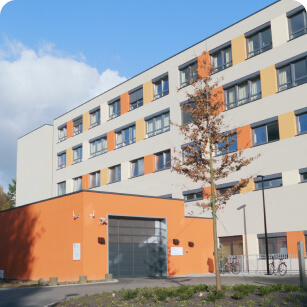
The association of clinics RheinRegio Klinik Zentrum offers the organization of treatment of laryngeal carcinoma in Germany without intermediaries, providing access to the country’s leading oncology clinics. We combine advanced techniques, an individual approach and the highest level of medical care, giving hope even in difficult cases.










Why RheinRegio Klinik Zentrum?

- Competence Center for Head and Neck Tumors
- International protocols (ESMO, NCCN)
- Phase I-II clinical trials
- 3D radiotherapy planning