
Treatment of liver cancer in Germany
Innovative methods of therapy: from local exposure to liver transplantation

Liver cancer is the 6th most common cancer in the world. RheinRegio Klinik Zentrum uses unique treatment protocols, including radioembolization, targeted therapy and liver transplantation. Our clinic specializes in a comprehensive approach to the treatment of both primary and metastatic liver tumors.
Liver cancer symptoms
Early signs (often absent)
- Heaviness and discomfort in the right hypochondrium
- Decreased appetite and quick satiety
- Unexplained weight loss (5-7 kg per month)
- Increased fatigue
Late symptoms
- Yellowness of the skin and sclera
- Abdominal enlargement (ascites)
- Dark urine and light stool
- Hepatic encephalopathy (confusion)
Alarm Signal: The appearance of new symptoms in patients with cirrhosis requires immediate evaluation.
Diagnosis of liver cancer at RheinRegio Klinik Zentrum
At RheinRegio Klinik Zentrum we carry out:
- Contrast MRI of the liver (characteristic accumulation of contrast according to LI-RADS criteria)
- PET-CT with choline (for cholangiocarcinoma)
- Ultrasound/CT-guided biopsy with immunohistochemistry
- Liquid biopsy (detection of circulating tumor DNA)
- Genetic tests:
- Mutations TERT, CTNNB1 (prognostic value)
- MSI/PD-L1 status (for immunotherapy)
Innovation: Perfusion CT to assess response to embolization.
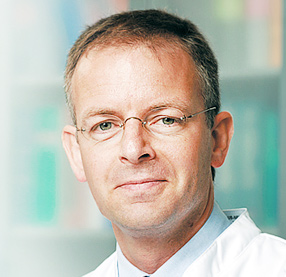
Each direction is supervised by advanced oncologists.
Find out the cost of treatment
To find out the approximate cost of treatment, answer a few questions and we will contact you!
Classification and stages of liver cancer
Main types
- Hepatocellular carcinoma (HCC) – 75-85% of cases
- Cholangiocarcinoma is a tumor of the bile ducts
- Metastatic cancer (usually from the intestines, breast)
Stages according to the BCLC system (2023)
- Stage 0: Very early (single node <2 cm)
- A stage: 1-3 nodes ≤3 cm without vascular invasion
- Stage D: Terminal (severe liver failure)
Example: HCC stage B (3 nodes up to 5 cm with invasion into the portal vein).
Liver cancer treatment methods
1. Surgical treatment
- Anatomical liver resection (segmentectomy, hemihepatectomy)
- Laparoscopic operations (for peripheral nodes)
2. Local methods
- Radiofrequency ablation (RFA) – for nodes ≤3 cm
- TACE/DEB-TACE (chemoembolization)
- Radioembolization Y-90 (selective irradiation)
3. Systemic therapy
- Atezolizumab + bevacizumab (first line for HCC)
- Regorafenib (if progression)
- Pembrolizumab (for MSI-H tumors)
4. Liver transplantation
- According to the criteria of the Milan Protocol (1 node ≤5 cm or 3 nodes ≤3 cm)
Survival prognosis
- Early stages after resection: 5-year survival rate 60-70%
- After transplantation according to Milan criteria: 75-80%
- Disseminated forms: median survival 12-18 months
Factors for improving prognosis:
- No vascular invasion
- Low AFP level (<400 ng/ml)
- Preserved liver function (Child-Pugh A)
Why choose Germany?
- Leader in hepatobiliary surgery – 30% lower complication rate vs global indicators
- Access to innovation – the first European applications of the combination of atezolizumab with bevacizumab
Conclusion
At RheinRegio Klinik Zentrum, individual strategies are used for each patient with liver cancer. We combine radical treatment with maintaining quality of life.
Sign up for a consultation – we are ready to help even in difficult cases!
Our clinics
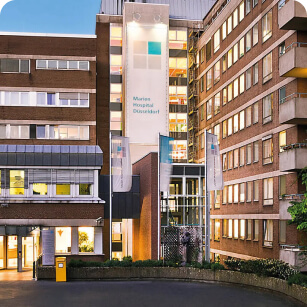
The association of clinics RheinRegio Klinik Zentrum offers the organization of liver cancer treatment in Germany without intermediaries, providing access to the country’s leading oncology clinics. We combine advanced techniques, an individual approach and the highest level of medical care, giving hope even in difficult cases.







Why RheinRegio Klinik Zentrum?

- Expert center for liver tumors – performing 150+ resections annually
- Combined techniques – sequential use of TACE and radioembolization
- Transplant program – cooperation with Eurotransplant
- Personalized treatment selection based on molecular profile
- Supporting Liver Function – Modern Detoxification Techniques