Treatment of lung cancer in Germany
Innovative therapies: from early diagnosis to personalized treatment

Lung cancer is one of the most aggressive cancers, ranking first in mortality among all types of cancer. RheinRegio Klinik Zentrum uses modern diagnostic and treatment methods, including minimally invasive surgery, targeted therapy and immuno-oncology. Our goal is to maximize the life of patients and improve its quality even in late stages.
Symptoms of lung cancer
-
Early signs (often absent)
- Prolonged cough (more than 2-3 weeks)
- Shortness of breath with normal exertion
- Chest pain that gets worse with deep breaths
- Decreased appetite and unexplained weight loss
Late symptoms
- Hemoptysis (blood in the sputum)
- Wheezing and hoarseness (recurrent nerve damage)
- Swelling of the face and neck (superior vena cava syndrome)
- Frequent pneumonia (due to bronchial obstruction)
Important: In 15% of patients, cancer is discovered accidentally during a chest x-ray.
Diagnosis of lung cancer at RheinRegio Klinik Zentrum
RheinRegio Klinik Zentrum uses high-precision methods:
- Low-dose CT – screening for smokers (reduces mortality by 20%).
- PET-CT – detection of metastases from 4 mm in size.
- Bronchoscopy with biopsy + histological examination.
Genetic tests:
- Mutations of EGFR, ALK, ROS1 – for selection of targeted therapy.
- PD-L1 – determination of sensitivity to immunotherapy.
Important: The diagnostic accuracy in our clinics reaches 98% thanks to the use of advanced methods.
Find out the cost of treatment
To find out the approximate cost of treatment, answer a few questions and we will contact you!
Classification and stages of leukemia
Main types of lung cancer
- Non-small cell lung cancer (NSCLC, 80-85%):
- Adenocarcinoma (more common in non-smokers)
- Squamous cell carcinoma (smoking-related)
- Small cell lung cancer (SCLC, 15-20%) – aggressive form with early metastasis.
Stages according to the TNM system
- Stage I: Tumor up to 4 cm without lymph node involvement (T1-2, N0, M0)
- Stage II:
- Tumor >4 cm without lymph node involvement (T2b-3, N0, M0)
- OR tumor of any size with metastases to nearby lymph nodes (T1-2, N1, M0)
- Stage III: Locally advanced process (T1-4, N2-3, M0)
- Stage IV: Distant metastases (any T and N, M1)
Lung cancer treatment methods
- Surgical treatment (for stages I-II):
- Lobectomy – removal of a lobe of the lung (using the Da Vinci robot)
- Sublinary resection is an organ-conserving operation for small peripheral tumors
- Radiation therapy:
- Stereotactic radiosurgery (CyberKnife) – high-precision irradiation of inoperable tumors
- Proton therapy is a modern method with minimal impact on healthy tissue
- Systemic therapy:
- Targeted drugs (eg, osimertinib for EGFR mutations)
- Immunotherapy (pembrolizumab for PD-L1 expression >50%)
- Chemoradiation treatment is the standard approach for small cell lung cancer (SCLC)
- Palliative care:
- Bronchial stenting for tumor obstruction of the airways
- Pain relief according to the WHO three-step scheme (WHO protocol)
Survival prognosis
- Stage I – 60-80% 5-year survival rate.
- Stage III – 15-30% (with combined treatment).
- Stage IV – 2% (but with immunotherapy up to 25 months of life).
Factors for improving prognosis:
- Early diagnosis (CT screening for risk groups).
- Presence of drug-resistant mutations (EGFR, ALK).
Why choose Germany?
- Leader in the treatment of lung cancer (5-year survival rate is 10-15% higher than the world average).
- Financial transparency – fixed cost of treatment.
At RheinRegio Klinik Zentrum, individual protocols are used for each patient. We combine advanced technology with decades of experience in the fight against lung cancer.
Sign up for a consultation – we are ready to help even in difficult cases!
Our clinics
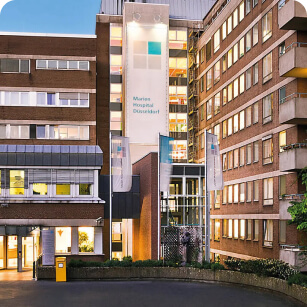
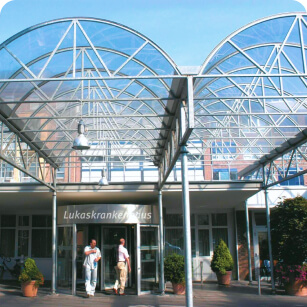
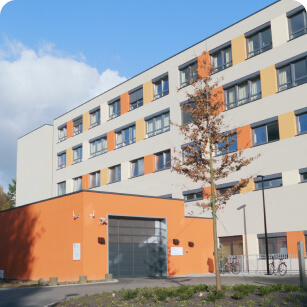
The association of clinics RheinRegio Klinik Zentrum offers cancer treatment in Germany without intermediaries, providing access to the country’s leading oncology clinics. We combine advanced techniques, an individual approach and the highest level of medical care, giving hope even in difficult cases.



Why RheinRegio Klinik Zentrum?

- Interdisciplinary council: oncologists, surgeons and radiologists jointly develop an individual treatment plan
- Genetic passport of the tumor: personalized selection of therapy based on the molecular profile of the tumor
- Minimally invasive surgeries: modern surgical techniques reduce the rehabilitation period to 5-7 days
- Clinical studies: access to innovative drugs (including amtivanamtab) within the framework of international protocols
- 24/7 support: comprehensive assistance in organizing treatment for foreign patients