Treatment of synovial sarcoma in Germany

Modern methods of treating synovial sarcoma: from genetic diagnosis to targeted therapy
Synovial sarcoma is a rare, aggressive soft tissue tumor arising from the synovium of joints, tendons, and fascia. In Germany, advanced treatment protocols are used, combining surgical, radiation and drug methods, which can significantly improve the prognosis of the disease.

Symptoms of synovial sarcoma

Key Features:

  • Accounts for 5-10% of all soft tissue sarcomas
  • Most often occurs between the ages of 15-40 years
  • Typical locations: knee joint, hip, foot
  • Tends to metastasize early

Clinical manifestations:

  • Painless lump in the joint area
  • Restricted mobility of the affected limb
  • Neurological symptoms (with compression of nerves)
  • Enlargement of regional lymph nodes (in 20% of cases)

Diagnosis of synovial sarcoma at RheinRegio Klinik Zentrum

  • MRI with contrast (gold standard imaging)
  • CT scan of the chest (exclusion of metastases)
  • PET-CT (assessment of the prevalence of the process)
  • Biopsy with immunohistochemistry:
    • Detection of translocation t(X;18)
    • Determination of SYT-SSX1/SSX2 genes
  • Molecular genetic testing

Each direction is supervised by advanced oncologists.

Find out the cost of treatment

To find out the approximate cost of treatment, answer a few questions and we will contact you!

    Treatment methods for synovial sarcoma

    1. Surgical treatment

    • Wide excision of the tumor including healthy tissue
    • Saving operations with microsurgical reconstruction
    • Joint replacement if necessary

    2. Radiation therapy

    • Neoadjuvant radiation (before surgery)
    • Intraoperative radiotherapy (IORT)
    • Proton therapy for difficult locations

    3. Systemic therapy

    • Neoadjuvant chemotherapy (ifosfamide + doxorubicin)
    • Targeted drugs (pazopanib, trabectedin)
    • Immunotherapy (for recurrent forms)

    Survival prognosis

    5-year survival rate is:

    • 70-80% for localized forms
    • 30-40% in metastatic process

    After treatment you must:

    • Chest CT scan every 3-6 months
    • MRI of the primary tumor area annually
    • PET-CT for suspected relapse
    • Lifelong observation by an oncologist

    Germany offers the most effective methods of combating synovial sarcoma. The RheinRegio Klinik Zentrum applies all modern standards of treatment, including access to innovative therapies.

    To consult with German specialists, leave a request on our website!

    Our clinics

    The association of clinics RheinRegio Klinik Zentrum offers the organization of treatment for synovial sarcoma in Germany without intermediaries, providing access to the country’s leading oncology clinics. We combine advanced techniques, an individual approach and the highest level of medical care, giving hope even in difficult cases.
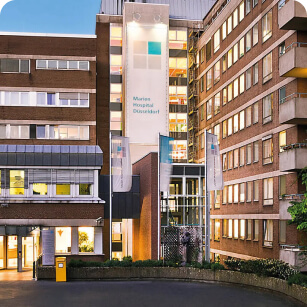
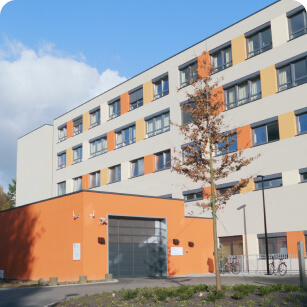
    Catholic Clinical Complex

    The clinic specializes in the diagnosis and medical treatment of tumor diseases of internal organs (solid tumors and carcinomas), connective and musculoskeletal tissues (so-called sarcomas), as well as diseases of the blood and lymphatic system (lymphoma and leukemia). It conducts a wide range of clinical studies aimed at developing new drugs and vaccines for the treatment of cancer.

    More details

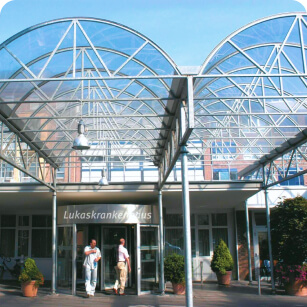
    Rhine Clinical Complex Hospital Lucas

    The Lucas Clinic plays a key role in the German healthcare system, offering a wide range of medical services. All diagnostic and therapeutic radiological activities are carried out at the Institute of Clinical Radiology. Using the most modern devices, in accordance with the latest medical advances, low-irradiation methods of radiation therapy are used.

    More details

    Sana’a Clinical Complex

    The Sanaa Clinical Complex actively uses the latest medical technologies in the treatment of cancer, including robotic surgical systems, high-precision diagnostics and innovative methods of radiation and chemotherapy.

    More details

    Our oncologists:

    Bjorn-Wieland Lisboa

    Gynecologist, senologist, specialist in the treatment of breast cancer, Doctor of Medical Sciences…

    More details

    Karl-Axel Hartmann

    A leading specialist in radiation therapy, Professor, Doctor of Medical Sciences, is included in the TOP list of the best German doctors…

    More details

    Tobias Heintges

    Prof., dr. honey. Sciences, oncologist, gastroenterologist. Included in the TOP list of the best doctors in Germany according to the results of the annual survey of the public journalistic magazine “FOCUS”

    More details

    Jörg Falbrede

    Gynecologist, oncologist, mammologist, uro-gynecologist, professor, doctor of medical sciences Jörg Falbrede is included in the TOP list of the best gynecologists in Germany…

    More details

    Aristotle Giagounidis

    Professor, Doctor of Medical Sciences, Head of the Clinic of Oncology and Hematology Medicine, is on the TOP list of the best German oncologists…

    More details

    Jan Martin Beron

    Dr. med. Jan Martin Beron, leading specialist in thoracic surgery. Specializes in the treatment of lung tumors, including lung cancer and metastases…

    More details

    Thomas Dirschka

    Dermatologist, onco-dermatologist, specialist in allergology and venereology, professor, doctor of medical sciences…

    More details

    Susan Ingman

    Radiologist, Diagnostic Radiologist, Nuclear Medicine Specialist, Dr. Susan Ingman, MD

    More details

    Why RheinRegio Klinik Zentrum?

    • Interdisciplinary council (surgeons, oncologists, radiologists)
    • World-class organ-preserving technologies
    • Customized protocols based on molecular profile
    • Rehabilitation programs with restoration of limb function
    • Clinical studies of innovative treatment methods
    Application for treatment

    Apply now, and our highly qualified staff quickly and professionally choose specialized clinics and physician and prepare visa invitation from the clinic. Application processing time varies from a few hours to 2-3 working days (depending on the complexity of the inquiry).